

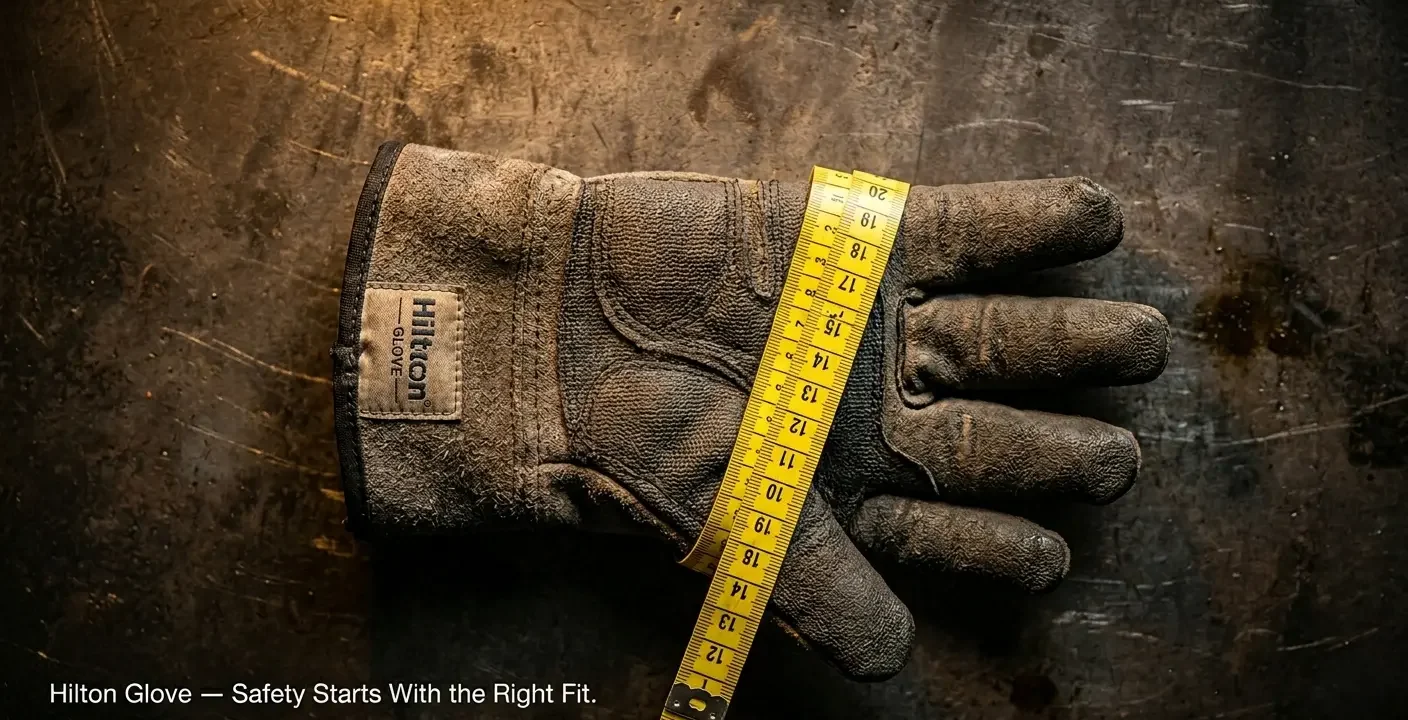
Most people grab a pair of gloves off the shelf, squeeze them on, and move on. If they fit, good enough, right?
Not exactly.
That quick grab-and-go approach is one of the most overlooked safety risks in industrial and professional environments. The difference between a glove that fits and one that truly fits comes down to one number: your hand circumference.
In this guide, we’ll break down what hand circumference actually is, how to measure it properly, and — most importantly — why getting it right can protect your workers, improve performance, and even keep your business OSHA compliant.
What Is Hand Circumference?
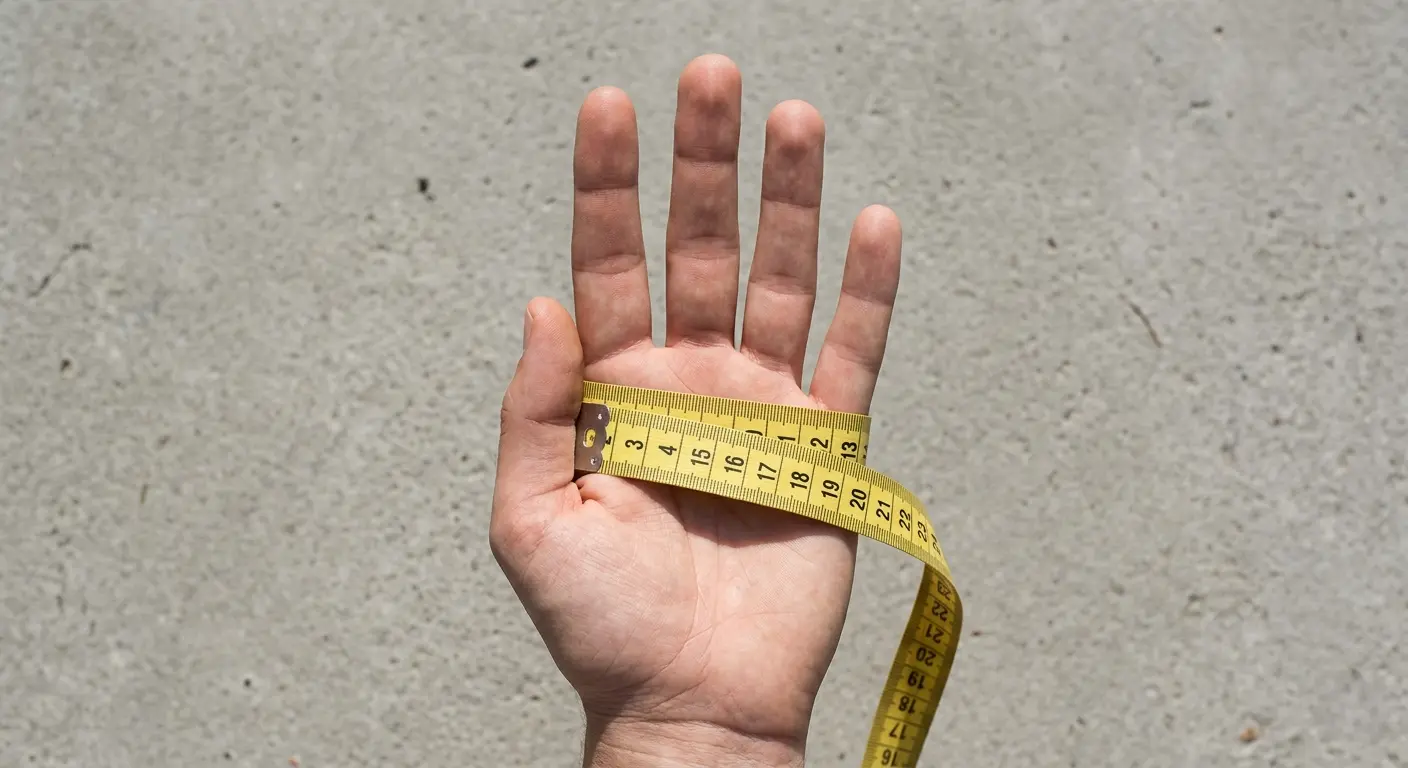
Hand circumference is the measurement of the widest part of your palm, taken just below the knuckles and excluding the thumb. It’s measured in inches or centimeters using a flexible measuring tape or a piece of string.
This single measurement is the foundation of glove sizing across virtually every industry, from cut-resistant industrial gloves to medical-grade exam gloves to heavy-duty welding protection.
Think of it this way: glove manufacturers design their sizes around this number. A size 8 glove, for example, is built to fit a hand that measures approximately 8 inches in circumference. The number is the measurement.
How to Measure Your Hand Circumference (Step-by-Step)
Measuring your hand circumference takes less than a minute and requires only a soft measuring tape or a piece of string and a ruler.
- Step 1: Use your dominant hand, your right hand if you’re right-handed, or your left hand if you’re left-handed.
- Step 2: Hold your hand flat and relaxed with fingers together (not spread apart).
- Step 3: Wrap the measuring tape around the widest part of your palm, just below the knuckles. Make sure the tape passes over your palm — not around your thumb.
- Step 4: Note the measurement in inches. This number is your glove size.
Quick Reference Chart:
| Hand Circumference | Glove Size | Letter Size |
| Under 7 inches | 6 – 6.5 | XS |
| 7 – 7.5 inches | 7 | S |
| 7.5 – 8 inches | 8 | M |
| 8 – 9 inches | 9 | L |
| 9 – 10 inches | 10 | XL |
| Over 10 inches | 11+ | XXL |
Pro Tip from Hilton Glove: If your circumference falls between two sizes, always size up—especially for safety gloves. A slightly roomier fit is safer and more comfortable than a glove that restricts blood flow or tears under pressure.
Why Hand Circumference Is Critical for Glove Fit
Here’s where most guides stop — at the “how to measure” step. But understanding why this matters is what separates a safe, productive workplace from a hazardous one.
1. Ill-Fitting Gloves Are a Hidden Safety Hazard
You might assume that any glove is better than no glove. But that’s not always true.
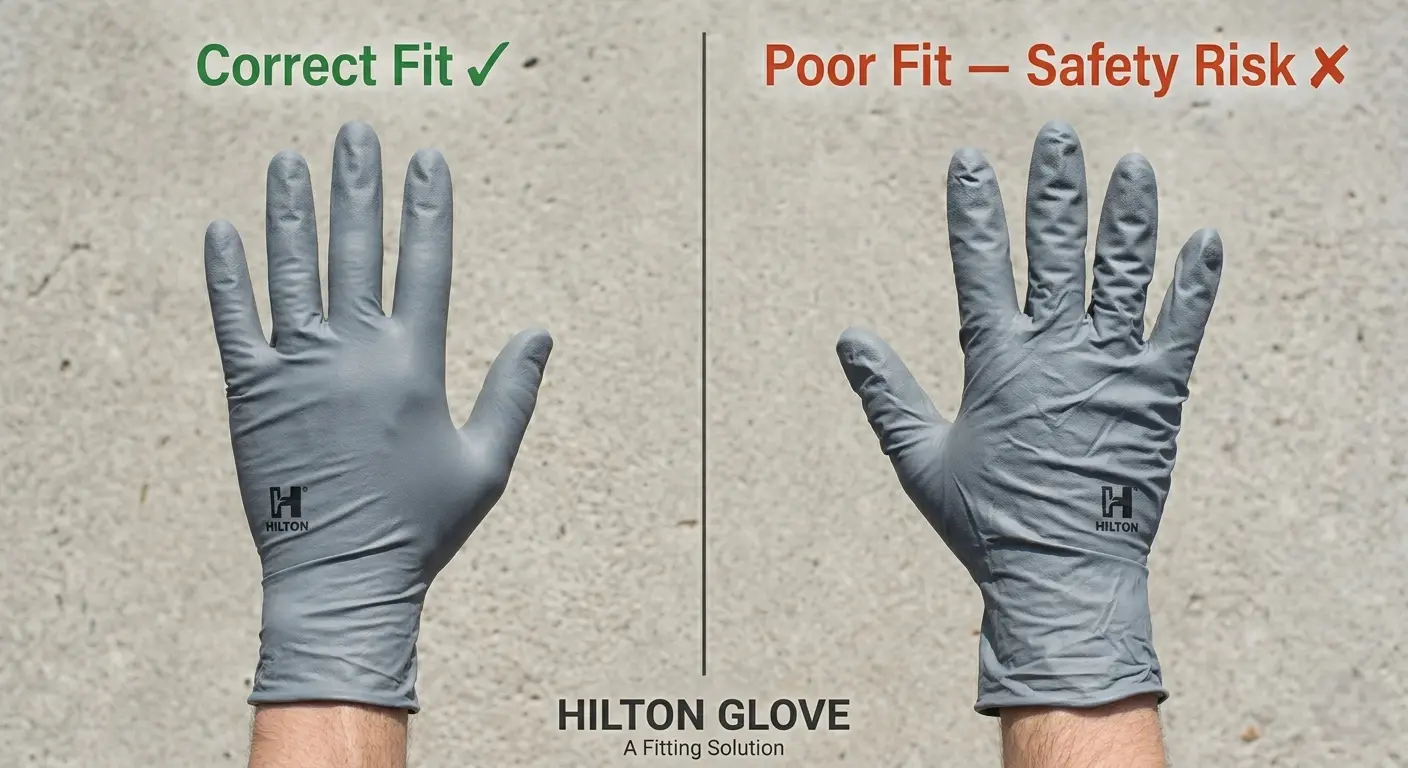
According to OSHA Standard 1910.138, hand protection that doesn’t fit properly may not provide the protection it’s designed to deliver. A glove that’s too loose can bunch up, reduce grip, and even get caught in rotating machinery, turning a safety product into a hazard.
Gloves that are too tight restrict circulation, limit dexterity, and cause fatigue, making workers more likely to take them off mid-task. That’s when accidents happen.
2. The Real Numbers Behind Hand Injuries
The statistics on workplace hand injuries are stark:
- Over 110,000 lost-time hand injuries occur in U.S. workplaces every year (U.S. Bureau of Labor Statistics)
- OSHA estimates 71% of those injuries could be prevented with proper use of PPE, specifically safety gloves
- Research shows 70% of hand injuries occur when workers are not wearing gloves at all, often because the gloves they were issued don’t fit right, so they stop using them
This is the hidden cost of poor sizing. It’s not just comfort — it’s compliance, productivity, and human safety.
3. Dexterity and Job Performance
Gloves that fit based on actual hand circumference allow full finger articulation, proper grip strength, and a natural range of motion. This matters enormously in roles involving precision work, tool handling, or assembly line tasks.
When workers can move naturally in their gloves, they perform better — and they keep the gloves on. That’s the goal.
4. Sizing Isn’t Universal Across Brands or Glove Types
One major mistake workers and safety managers make: assuming a “medium” is a medium everywhere.
It’s not.
A medium in a nitrile disposable glove is built differently than a medium in a leather work glove or a cut-resistant knit glove. Glove construction, material stretch, and intended use all affect the final fit. That’s why measuring your actual hand circumference — rather than relying on a generic label — gives you the most accurate fit across any glove type or brand.
5. OSHA Compliance Starts With Proper Fit
OSHA’s hand protection standard (1910.138) doesn’t just require employers to provide gloves — it requires gloves that fit well, are comfortable, and encourage consistent use. If your workforce is wearing wrong-sized gloves, you may be exposed to compliance risk even if you’ve checked the “gloves provided” box.
Proper sizing is part of a proper PPE program.
Why Industrial Workers Need to Be Extra Careful
In light manufacturing, warehousing, construction, chemical handling, or any environment with physical hazards, glove fit takes on even greater importance.
Workers in these environments often:
- Wear gloves for extended shifts (6–12+ hours)
- Handle sharp, abrasive, or chemically active materials
- Operate machinery where loose gloves are a serious entanglement risk
- Work in teams where gloves are sometimes shared or assigned without individual sizing
Each of these scenarios makes accurate hand circumference measurement not just a best practice but a workplace safety standard.
How Hilton Gloves Make Sizing Simple
At Hilton Glove, we’ve built our entire product line around one principle: protection only works when it fits.
That’s why every glove in our industrial and commercial range is sized precisely to hand circumference measurements, with detailed size charts that account for both circumference and hand length. Whether you’re outfitting a single technician or an entire production floor, we help you get every worker into the right size, every time.
Our team is available to assist with bulk sizing consultations, sample kits, and custom PPE programs tailored to your industry’s specific hazards.
The Bottom Line
Hand circumference isn’t just a sizing technicality. It’s the foundation of glove performance, workplace safety, and OSHA compliance.
A glove that fits protects. A glove that doesn’t, whether too loose or too tight, creates risk.
Take two minutes to measure your hand circumference using the steps above. Use the chart to find your size. And when you’re ready to find the right glove for your job, Hilton Glove is here to help.
[Browse Our Glove Sizing Guide →] [Get a Free Sizing Sample Kit for Your Team →]
Frequently Asked Questions (FAQs)
Q1: What is hand circumference, and how is it different from hand length?
Hand circumference is the measurement around the widest part of your palm, just below the knuckles, excluding the thumb. Hand length, on the other hand, is measured from the tip of your middle finger down to your wrist. Most industrial and safety gloves are sized primarily by circumference—it’s the single most accurate indicator of glove fit. Some brands use both measurements; when they differ, always choose the larger size.
Q2: What is the average hand circumference for men and women?
For most adult men, hand circumference typically falls between 8 and 10 inches (20–25 cm). For most adult women, it ranges between 6.5 and 8 inches (16–20 cm). These are averages — your actual measurement is what matters for a proper glove fit. Always measure before ordering, regardless of gender.
Q3: How do I measure hand circumference without a tape measure?
No tape measure? No problem. Wrap a piece of non-stretchy string around the widest part of your palm (below the knuckles, excluding the thumb), mark where it overlaps, then lay the string flat against a ruler. The measurement in inches is your hand circumference and your approximate glove size.
Q4: Does glove size vary between brands?
Yes—and this is one of the most common glove-buying mistakes. A “large” in one brand may correspond to a different hand circumference than a “large” in another. Always refer to the specific manufacturer’s sizing chart rather than assuming a letter size translates universally. This is especially important for industrial PPE gloves, where an improper fit can directly affect safety performance.
Q5: What happens if I wear gloves that are too tight or too loose?
Both create real problems. Gloves that are too tight restrict blood circulation, reduce dexterity, cause fatigue, and are more likely to tear under pressure. Gloves that are too loose reduce grip strength, create dangerous bunching near moving equipment, and are more likely to be removed by workers mid-task—which is when most hand injuries occur. Proper fit based on actual hand circumference eliminates both risks.
Q6: Should I use my dominant hand or non-dominant hand to measure glove size?
Always measure your dominant hand—your right hand if you’re right-handed, your left if you’re left-handed. The dominant hand is typically slightly larger due to greater muscle development. If your two hands differ noticeably in size, size up to the larger measurement to ensure the protection glove fits comfortably on both.
Q7: Is hand circumference the same measurement used for all glove types?
For most industrial, work, and safety gloves, yes—circumference below the knuckles is the standard. However, some specialty gloves (like welding gauntlets or winter-lined gloves) may factor in additional measurements like cuff length or palm depth. For standard cut-resistant, chemical, or general-purpose industrial gloves, hand circumference is the primary and most reliable sizing measurement.
Q8: How often should workers be re-measured for glove size?
Glove sizing is generally stable for adults, but it’s good practice to re-measure when a worker’s role changes and requires a different glove type, body weight changes significantly, or workers report consistent discomfort or reduced grip. For industrial facilities, conducting a PPE sizing audit once a year is a simple step that significantly reduces injury risk and improves glove compliance across the workforce.