








Welding Gloves Reinforced Palm | Maximum Hand Protection
When it comes to hand safety in high-heat environments, not all welding gloves are created equal. The difference between an ordinary pair of gloves and the best welding gloves on the market comes down to construction quality, material durability, and one critical design feature: the reinforced palm. Whether you are a professional welder, a fabrication shop manager, or someone searching for reliable welding work gloves for daily use, this guide will walk you through everything you need to know to make the right choice.
Why Reinforced Palm Welding Gloves Outperform Standard Options
The palm is the most high-contact zone of any welding glove. Every time you grip a torch, handle hot metal, or brace against a workpiece, the palm absorbs the most friction, heat, and mechanical stress. Standard welding gloves often use a single layer of split leather across the palm, adequate for light tasks, but not for sustained professional welding.
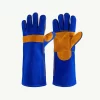
Welding gloves reinforced palm designs address this directly. By adding an extra leather patch, double-layer cowhide, or Kevlar-backed panel across the palm area, these gloves deliver:
- Significantly longer lifespan in high-friction environments
- Greater resistance to abrasion from sharp metal edges, grinding wheels, and rough workpieces
- Superior heat insulation exactly where you need it most
- Improved grip stability when handling heavy components or welding torches
- Reduced hand fatigue during extended welding shifts
For MIG welding, stick welding, or any process involving sustained spatter and heat, welding gloves with a reinforced palm are not a luxury, they are a safety necessity.
What Makes the Best Welding Gloves in 2026
With dozens of options available, identifying the best welding gloves requires evaluating several key performance factors. Here is what separates premium welding work gloves from the rest:
1. Leather Quality and Type
The outer shell of any top-tier welding glove starts with the leather. The best welding gloves use premium split cowhide or buffalo leather, both chosen for their natural heat resistance, density, and durability. Split leather provides a balance of flexibility and protection, making it ideal for welding work gloves that need to deliver both dexterity and defense.
- Split cowhide leather: Ideal for MIG and stick welding; offers excellent abrasion and spatter resistance
- Buffalo leather: Denser and tougher; preferred for heavy-duty fabrication and high-heat applications
- Full-grain leather: Premium option with greater natural oil resistance and extended lifespan
2. Reinforced Palm Construction
The defining feature of the best welding gloves is how they protect the palm. Look for welding gloves reinforced palm designs that include:
- Double-layer palm patches made from thick cowhide or grain leather
- Kevlar-stitched seams that resist heat and mechanical stress at critical stress points
- Wing thumb construction for natural hand movement without sacrificing palm coverage
- Gunn-cut patterns that reduce bunching in the palm and improve overall glove fit
3. Lining for Heat and Comfort
The interior lining is what stands between your skin and the heat conducted through the leather. The best welding work gloves offer multiple lining options:
- Cotton lining: Lightweight and breathable; best for lighter fabrication tasks and warm environments
- Fleece lining: Balanced insulation and softness; suitable for general MIG and TIG welding applications
- Wool lining: Maximum thermal protection with natural moisture-wicking; ideal for sustained stick welding in demanding conditions
4. Cuff Length and Wrist Protection
True hand protection extends beyond the fingers. The best welding gloves feature gauntlet-style cuffs ranging from 12 to 16 inches in length. Extended cuffs shield the wrist and forearm from sparks, UV radiation, and spatter, areas that shorter welding work gloves leave completely exposed.
5. Thread and Stitching Integrity
Stitching is the silent failure point in low-quality welding gloves. Heat degrades standard cotton thread quickly, causing seams to split and glove integrity to collapse under pressure. Premium welding gloves use reinforced Kevlar stitching throughout — a material that retains its strength even at extreme temperatures, ensuring your gloves hold up shift after shift.
Welding Work Gloves by Process: Matching Gloves to Your Welding Method
Different welding processes place different demands on your gloves. The best welding work gloves are those matched precisely to the job at hand.
MIG Welding Gloves
MIG welding generates continuous spatter and sustained heat. Welding work gloves for MIG applications need thick leather, a reinforced palm, and a longer gauntlet cuff – typically 14 to 16 inches, to protect against the constant barrage of hot metal droplets. Fleece or wool lining provides the insulation required for longer sessions at the torch.
TIG Welding Gloves
TIG welding demands precision above all else. Thinner, more flexible welding gloves allow the welder to feel the filler rod and maintain arc control. A reinforced palm still matters here – it protects the grip hand from heat during prolonged TIG work , but flexibility and tactile sensitivity are equally important. Look for welding gloves with a gunn-cut pattern and minimal padding for TIG applications.
Stick Welding Gloves
Stick welding produces the highest heat and spatter of any common welding process. The best welding gloves for stick welding combine heavy split leather construction, a fully reinforced palm, wool lining for maximum insulation, and a 16-inch gauntlet cuff. Flame-resistant certification and oil-resistant treatment are additional indicators of quality in stick welding work gloves.
Fabrication and Metalworking Gloves
Beyond welding, fabrication tasks – grinding, cutting, handling sharp sheet metal – demand gloves with strong cut resistance in addition to heat protection. The best welding work gloves for fabrication feature reinforced palm panels, full leather coverage, and Kevlar stitching that collectively protect against both thermal and mechanical hazards.
How to Choose the Right Size Welding Gloves
Proper fit is non-negotiable when selecting welding work gloves. An ill-fitting glove, too loose or too tight, compromises both safety and performance.
Our Company Sizes :
| Size | Lenght | Width |
| M | 12.0 | 5.0 |
| L | 14.0 | 5.0 |
| XL | 16.0 | 5.0 |
- Too loose: Reduces dexterity, increases the chance of the glove catching on equipment, and reduces tactile control over tools
- Too tight: Restricts blood flow, causes hand fatigue, and can limit range of motion at critical moments
Premium welding gloves made with split cowhide leather have a natural break-in period. The leather gradually conforms to the shape of your hand, creating a custom fit that improves comfort without sacrificing protection. When sizing, aim for a snug fit with enough room to flex your hand fully without restriction.
Color-Coded Welding Gloves for Workshop Safety and Organization
Beyond personal preference, color-coded welding work gloves serve a functional purpose in professional workshops. Many fabrication facilities implement color systems to designate gloves by process, material type, or work zone, preventing cross-contamination between metals such as stainless steel and carbon steel, and maintaining strict process controls in quality-sensitive manufacturing environments.
Common color options in professional welding gloves include:
- Red (HE-708-R): High-visibility designation for safety-critical or high-heat zones
- Blue (HE-708-B): Widely used for aluminum TIG welding and clean-room fabrication tasks
- Grey (HE-708-GR): A neutral, versatile option suited to any workshop setting
- Yellow (HE-708-Y): High-visibility for specialized processes where glove identification is critical
- Natural (HE-708-N): Classic leather appearance with premium aesthetics
Color-coded reinforced palm welding gloves also make safety inspections faster. When the reinforced palm patch shows visible wear or fraying, supervisors can instantly identify gloves that need replacement, a simple but effective way to maintain PPE compliance across large crews.
Caring for Your Welding Work Gloves: Maintenance Tips That Extend Lifespan
Even the best welding gloves will deteriorate quickly without proper maintenance. Follow these care guidelines to protect your investment:
- Remove spatter and metal debris after each use while the gloves are still slightly warm and pliable
- Never machine wash welding work gloves, spot-clean with a damp cloth only
- Allow gloves to air-dry naturally away from direct heat sources, which can cause leather to crack and stiffen
- Apply a leather conditioner periodically to maintain suppleness, but avoid over-conditioning as this can reduce the leather’s natural flame resistance
- Store in a cool, dry place away from UV exposure, which breaks down leather over time
- Inspect the reinforced palm patch and seam stitching regularly, visible wear or separation are clear signals for replacement
A well-maintained pair of premium welding gloves with a reinforced palm will outlast several pairs of cheaper alternatives, making quality an economical choice over the long term.
Bulk and Wholesale Welding Work Gloves for Industrial Operations
For fabrication shops, construction companies, and industrial facilities outfitting entire teams, bulk purchasing of welding work gloves delivers significant advantages in both cost and consistency. When every worker on the floor has access to the same high-quality, reinforced palm welding gloves, safety compliance becomes simpler to manage and PPE inspections are more straightforward.
Key considerations for bulk welding glove procurement:
- Consistent sizing availability across all standard sizes
- Color-coding options for process-specific glove assignment
- Custom logo embossing or printing for branded safety equipment
- OEM and private label packaging for distributors and retailers
- Standard bulk packing (typically 60 pairs per carton) for efficient inventory management and site distribution
Full Technical Specifications: What to Look for in Premium Welding Gloves
When evaluating the best welding gloves for purchase, use this specification checklist:
- Material: Split cowhide or buffalo leather
- Design: Gunn cut, wing thumb, reinforced palm & finger patches
- Lining Options: Cotton/fleece/wool
- Cuff Style: 12-16 inch gauntlet cuffs
- Colors: Red, grey, blue, or custom dye
- Packing: 1 pair/polybag | 60 pairs/carton
- Case Dimensions: 72 × 42 × 36 cm
- Case Weight: ~36 kg
The Bottom Line: Invest in Welding Gloves That Protect Your Most Important Tools
Your hands are your livelihood. The right pair of welding work gloves, built with a genuine reinforced palm, premium leather construction, and Kevlar stitching, can mean the difference between a productive day and a preventable injury. The best welding gloves are not simply a piece of PPE equipment. They are a precision tool engineered to let skilled welders work confidently, comfortably, and safely, shift after shift.
Whether you need a single pair for personal use or bulk welding gloves for a full industrial crew, prioritize reinforced palm construction, quality leather, and Kevlar stitching in every pair you choose. That investment in quality pays for itself in protection, performance, and peace of mind.
Frequently Asked Questions About Welding Gloves
What is the difference between standard welding gloves and welding gloves with a reinforced palm?
Standard welding gloves use a single layer of leather across the palm, which provides basic protection but wears through quickly under constant friction and heat. Welding gloves with a reinforced palm add a second layer of leather or a Kevlar-backed patch over the palm area, significantly extending durability and heat resistance exactly where it matters most.
Which welding work gloves are best for MIG welding?
The best welding work gloves for MIG welding feature heavy split leather, a reinforced palm patch, Kevlar stitching, and a gauntlet cuff of at least 14 inches. Fleece or wool lining provides the insulation needed for sustained MIG welding sessions with continuous spatter exposure.
Can welding work gloves be used for TIG welding?
Yes, but TIG welding benefits from thinner, more flexible welding gloves than those used for MIG or stick welding. Look for a gunn-cut pattern with a reinforced palm that still allows tactile sensitivity. Thicker gloves designed for stick welding can reduce the dexterity needed for precise TIG filler rod manipulation.
How do I know when my welding gloves need replacing?
Inspect the reinforced palm patch and stitching seams regularly. Signs that welding work gloves need replacing include visible burn-through on the leather, fraying or broken Kevlar seams, stiffened or cracked leather that no longer conforms to your hand, and reduced dexterity caused by glove deformation. Never continue using compromised welding gloves, the risk of injury is not worth the cost savings.
Are the best welding gloves also suitable for metalworking and fabrication tasks?
Absolutely. Premium welding work gloves with reinforced palms and cut-resistant leather construction are equally suitable for grinding, cutting, handling sheet metal, and general fabrication tasks. The same properties that make them the best welding gloves, durable leather, reinforced high-stress zones, and Kevlar stitching, also protect against the mechanical hazards common in metalworking.