

What Does Glove Size Actually Mean?
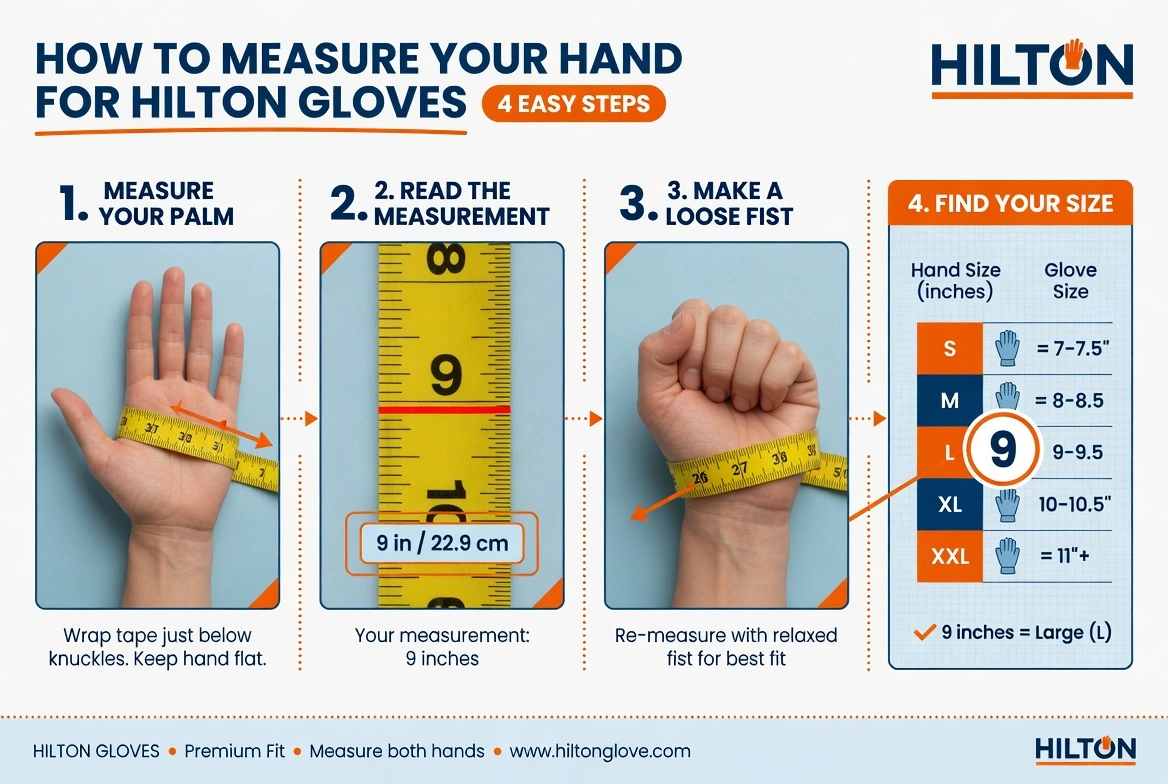
Glove size is not just a label. It is a direct measurement of your hand’s circumference, typically in inches, taken around the widest part of your palm just below the knuckles.
Most US brands use a simple number-to-letter system. A circumference of 8.5–9 inches is a medium. A 9.5–10 inch hand is large. Getting this number right is the starting point for everything else.
The problem is that most people have never measured their hand. They guess, and they guess wrong more often than not.
Why a Bad Fit Wears You Down
Comfort is not just about feeling nice. In a work environment, discomfort becomes a performance problem within the first hour.
Too Tight
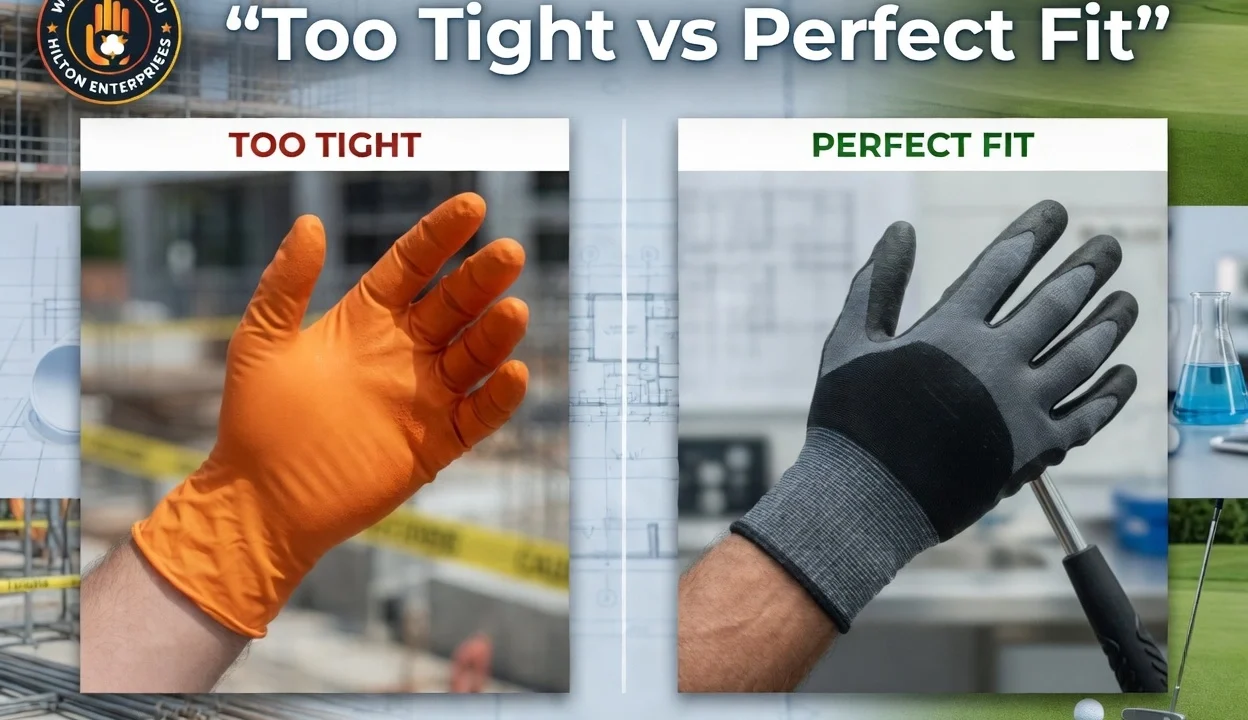
A glove that is too small compresses the fingers and restricts blood flow. Your hand tires faster, movement becomes stiff, and after a few hours you start to feel numbness or tingling in the fingertips.
Over time, a consistently tight glove can contribute to wrist strain and repetitive stress injuries, particularly for workers doing hundreds of repetitive movements per shift.
Too Loose
A glove that is too large creates excess material at the fingertips and palm. This causes the glove to bunch and shift during use, which is uncomfortable and distracting.
Workers with loose gloves also grip harder than necessary to compensate for the shifting material. That extra effort builds up into hand and forearm fatigue far sooner than it should.
What You Lose with the Wrong Size
This is where sizing has the most measurable impact — and where most guides stop short of giving you the full picture. Research from the University of Waterloo’s Centre for Musculoskeletal Disorder Prevention confirms that even a correctly fitted glove reduces maximum grip strength slightly compared to bare hands. An incorrectly fitted glove makes this loss significantly worse. When a glove is too loose, the wearer compensates by gripping harder with every single repetition to prevent the material from moving. This is called compensatory gripping, and it generates far more muscular force per task than the work actually demands.
Across a full shift of assembly-line work, tool operation, or machine handling, that invisible extra effort compounds into real fatigue. Studies have found a direct link between improperly sized gloves and musculoskeletal disorders (MSDs), including carpal tunnel syndrome, forearm tendinopathy, and repetitive strain injuries—conditions that are painful, costly to treat, and entirely preventable. In precision-heavy roles like surgical work, a 2025 clinical review found that gloves with poor fit reduce tactile sensitivity and manual dexterity in measurable ways, forcing surgeons into compensatory movements that increase fatigue during long procedures. In sports like golf and baseball, a glove that bunches at the palm introduces grip-pressure inconsistency between repetitions, translating directly to performance variability. The bottom line is this: a glove’s performance specification, its cut resistance rating, its grip coating, and its thermal protection value are achieved under tested conditions using a properly fitted sample. Deviate from that fit, and you deviate from the rating.
The Numbers Don’t lie.
According to OSHA and Bureau of Labor Statistics data, 70% of workers who suffer hand injuries were not wearing gloves at the time.
A significant driver of this is poor fit. When gloves are uncomfortable or restrictive, workers remove them. They choose bare hands over a glove that makes the job harder.
There are also direct physical safety risks from the wrong size:
- A loose glove can catch on moving machinery — a documented OSHA entanglement hazard.
- A tight glove is more prone to punctures and tears, reducing cut resistance below its rated level.
- A loose chemical glove gaps at the wrist, creating a direct entry point for hazardous liquids.
The fix in each case is the same: the right size.
Glove Fit Types You Should Know
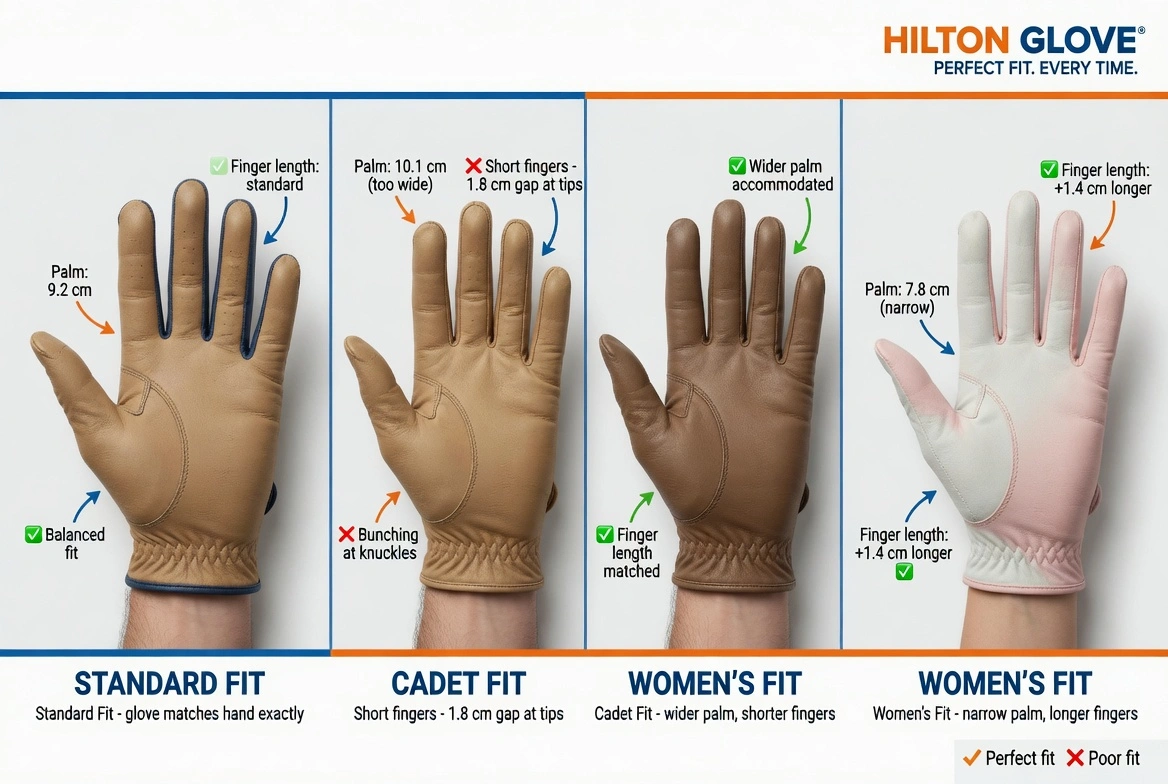
Standard sizing assumes your palm width and finger length scale equally. In reality, they often don’t. Here are the most common fit types:
Standard Fit
Palm circumference and finger length are proportional. Works for most people using the standard size chart.
Cadet Fit (Short Finger)
Designed for workers with wide palms but shorter fingers. Very common among tradespeople and mechanics.
If you always feel loose material bunching at your fingertips in incorrectly sized gloves, a cadet fit is likely what you need.
Women’s Fit
Most industrial gloves are cut to men’s proportions. Women typically have narrower palms with longer, more slender fingers.
If you are buying unisex gloves, size down one full step. Better yet, look for women-specific sizing where the finger-to-palm ratio has been adjusted.
A Quick Note on Temperature and Hand Swelling
Hands are not a fixed size. They swell in heat and contract in cold.
If you work in a hot environment, a foundry, an outdoor summer site, or a kitchen, measure your hand after some light activity, not first thing in the morning at rest. That gives you the working-condition size that will serve you through a full shift.
For cold-weather work, a glove that fits snugly at room temperature may feel tight when fingers are cold. Leave a little room in your sizing for winter gloves specifically.
How to Check If Your Gloves Fit Correctly
You don’t need a tape measure to spot a sizing problem. These signs tell you immediately:
- Pulling or tightness between the fingers when making a fist means the glove is too small.
- Loose material or bunching at the fingertips, too large, or you need a tighter fit.
- The glove rotates or shifts during use; it’s too loose.
- Numbness or tingling in the fingers: Circulation is being restricted; it’s too tight.
- Gloves wearing out faster than expected — a tight glove is under constant tensile stress.
- Hand fatigue arriving much earlier than the workload should cause, a compensatory grip from a loose fit.
Final Tips for Getting Glove Size Right
Finding the right glove size does not have to be complicated. Start by measuring your dominant hand’s palm circumference with a flexible tape measure. Match that number to the brand’s size chart, not a generic one.
When in doubt between two sizes, size up for comfort and dexterity tasks. Size down for high-force grip work. For leather gloves, always size snug; the leather will stretch to fit.
Remember: a glove that nobody wears is not protecting anyone. The best glove is the one that fits well enough that workers keep it on.
FAQs
What is the most important measurement for glove sizing?
Palm circumference in inches is the primary measurement. Wrap a tape measure around the widest part of your palm — just below the knuckles, excluding the thumb — while making a loose fist. That number tells you your glove size.
Does glove size affect protection ratings like cut resistance?
Yes. ANSI/ISEA 105-2024 cut resistance ratings are tested on properly fitted samples. A too-large glove has looser material that sits away from the skin, reducing real-world cut resistance. A too-tight glove is more prone to tearing under stress. Always size correctly to get the protection the rating promises.
What is a cadet glove fit?
A cadet fit is designed for people with wide palms and shorter-than-average fingers. The palm is cut wider while the finger stalls are shorter. It is very common among tradespeople and mechanics who have developed muscular hand width without proportional finger length.
How do I measure my hand size for gloves without a tape measure?
Use a strip of paper or string. Wrap it around the widest part of your palm below the knuckles, mark where it meets, then measure that length against a standard ruler. The result in inches is your glove size.