

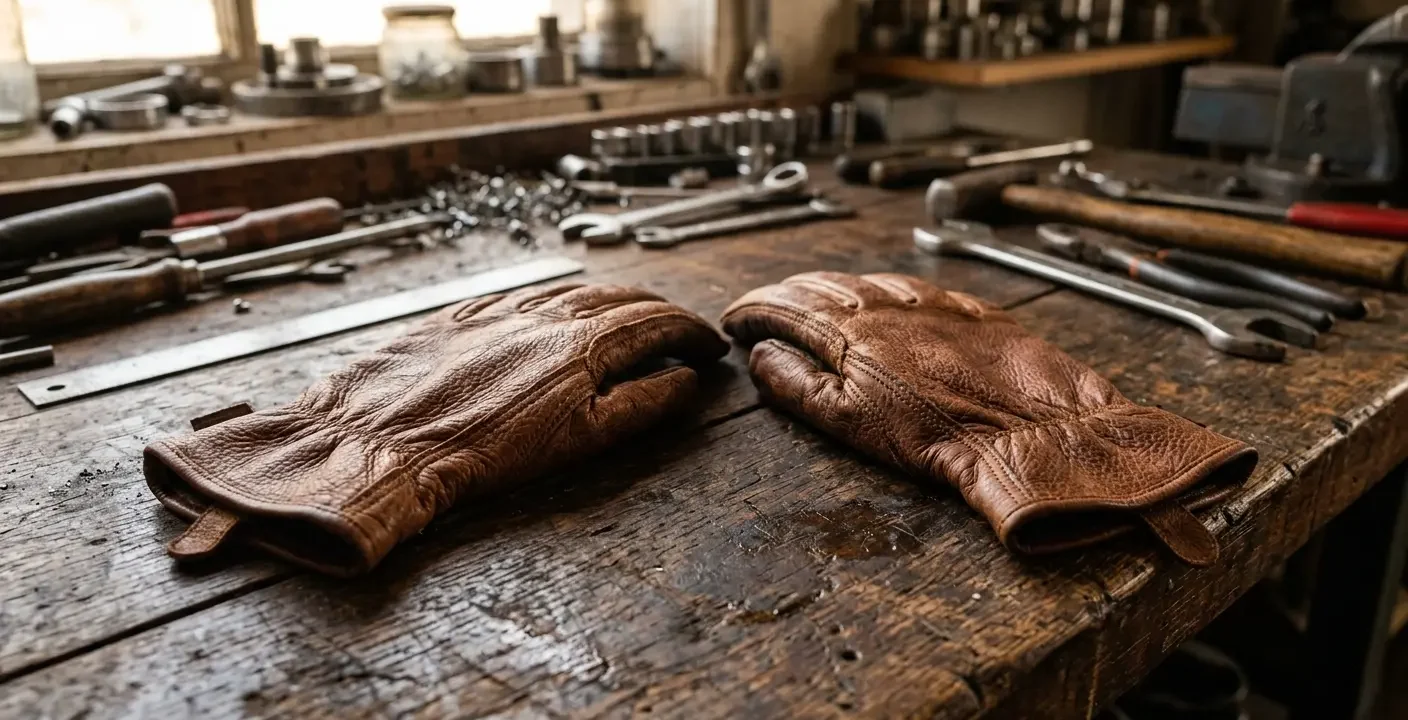
Pick up a pair of goatskin work gloves, and you’ll notice something immediately: they feel nothing like the stiff, bulky leather gloves you might expect.
They’re soft. They’re light. And they conform to your hand as if they were made for it.
That’s not a coincidence. Goatskin has been the leather of choice for precision and protection for decades, and in industrial environments across the USA, it remains the preferred material for workers who need comfort and performance in the same glove.
Here’s everything you need to know.
What Is Goatskin Leather?
Goatskin leather is a natural hide sourced from goats and processed through vegetable or chrome tanning to create a durable, flexible material used across many industries, including premium work gloves.
What sets it apart is its natural structure. Goatskins contain tightly woven, fine-grain fibers and retain natural lanolin oils even after tanning. Lanolin is a waxy substance that acts as an internal conditioner, keeping the leather soft, supple, and resistant to moisture without any chemical treatment.
The result is a material that is:
- Softer and more flexible than cowhide or pigskin
- Stronger relative to its weight: goatskin has higher tensile strength per thickness
- Naturally breathable: reducing hand sweat and fatigue on long shifts
- Resistant to light abrasion and cuts without being bulky
For workers who spend hours gripping tools, parts, or materials, that combination is difficult to beat.
Why Is Goatskin Leather Used for Work Gloves?
Superior Flexibility
Goatskin’s fine fiber structure gives it a natural range of motion that coarser leathers can’t match. Workers in assembly, automotive, and precision handling tasks can flex and grip without fighting the glove material itself. Less resistance = fewer mistakes and less fatigue.
High Dexterity and Grip
The grain texture of goatskin creates natural surface friction, ideal for gripping tools, fasteners, and parts securely. Unlike synthetic materials, it doesn’t become slippery when lightly oiled or damp.
Comfortable for Long Shifts
Because goatskin breathes well and holds its soft shape over time, it doesn’t stiffen or crack during extended wear. Workers who need to keep gloves on through 8- or 10-hour shifts consistently rate goatskin gloves as more comfortable than heavier leather alternatives.
Lightweight but Durable
Goatskin is noticeably lighter than cowhide or split leather gloves of equivalent protection. That reduced weight directly cuts down on hand fatigue, which is particularly relevant in fast-paced warehouse, manufacturing, and logistics environments.
Natural Water Resistance
The lanolin oils in goatskin provide moderate natural water resistance, offering a degree of protection in light moisture conditions without the need for additional waterproof coatings.
| Feature | Goatskin | Cowhide |
| Flexibility | Excellent — naturally supple | Moderate — stiffer, especially when new |
| Dexterity | A high, fine grain allows precise movement | Lower, thicker material limits finger range |
| Comfort (long wear) | Very high, breathable, soft | Moderate — can stiffen during extended use |
| Grip | Excellent natural texture | Good, improves with wear |
| Durability | Good — strong for its weight | Very high — heavier-duty applications |
| Water Resistance | Moderate (natural lanolin) | Low to moderate (depends on treatment) |
| Weight | Light | Heavier |
| Best For | Precision work, light-to-medium duty | Heavy-duty, rough material handling |
Goatskin vs. Cowhide: Which Is Better for Industrial Work?
For a deeper breakdown of cost and performance differences, see our Complete Goatskin vs. Cowhide Glove Comparison.
Industries That Use Goatskin Gloves
- Construction workers rely on goatskin gloves for tasks requiring both protection and tool control, such as drywall installation, carpentry, and framing, where a bulky glove creates real errors.
- Warehouse and logistics teams prefer them during extended picking and packing shifts because of their breathability and lightness.
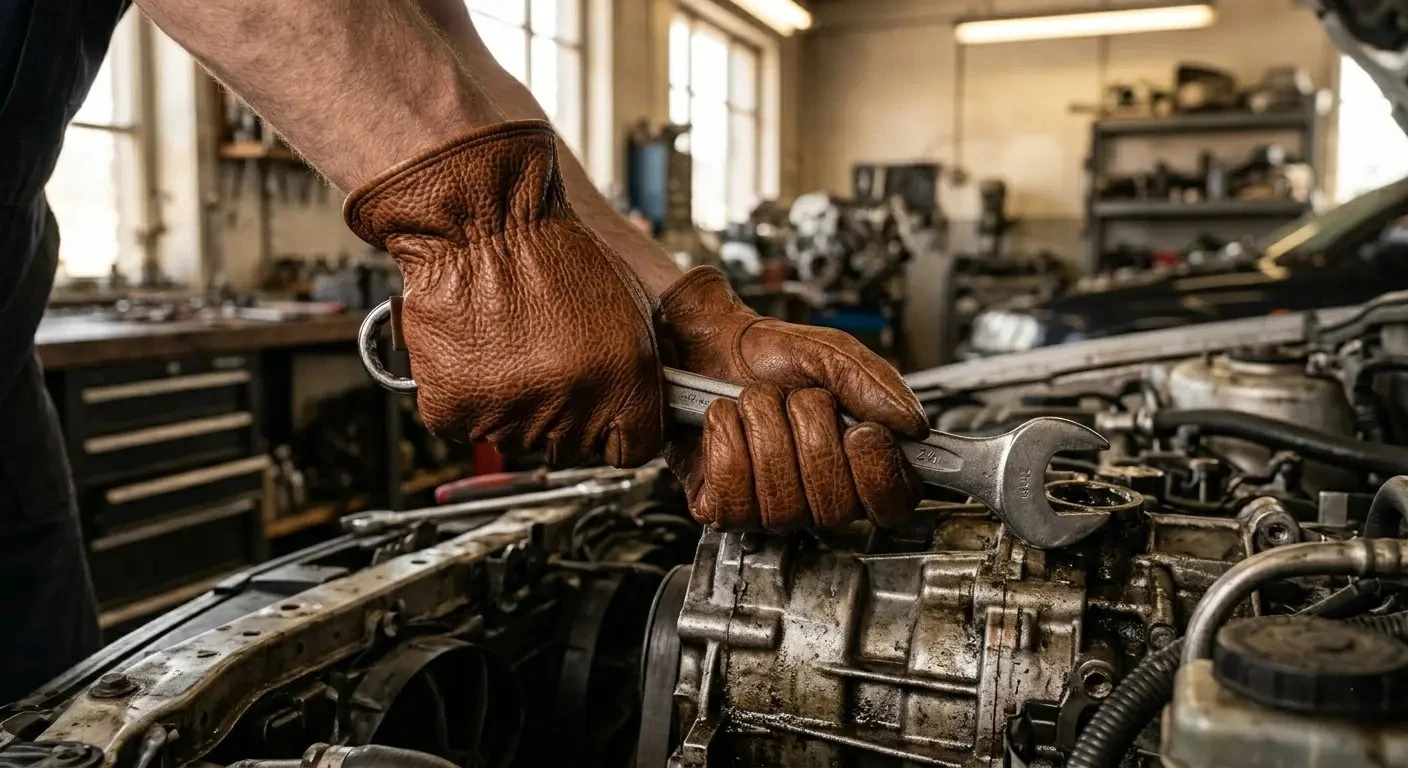
- Automotive and mechanical technicians need the dexterity to handle small fasteners and parts; goatskin delivers without sacrificing hand protection.
- Manufacturing and assembly lines benefit from goatskin’s grip and flexibility in repetitive precision tasks where hand fatigue accumulates over a full shift.

How to Choose the Right Goatskin Gloves
- Thickness: Thinner goatskin offers maximum dexterity for precision work. Thicker cuts or double-palm styles add abrasion resistance for rougher applications.
- Cuff type: Knit wrist cuffs keep debris out and stay snug during active work. Safety cuffs provide more forearm coverage for construction or welding-adjacent tasks.
- Lined vs. unlined: Unlined goatskin delivers the best dexterity. A cotton or fleece liner adds warmth for outdoor or cold-storage environments.
- Grip requirements: Look for keystone thumb construction and reinforced palm panels if your application involves heavy tool handling.
Work with a Trusted Industrial Glove Manufacturer
At Hilton Glove, we manufacture premium goatskin leather gloves and a full range of industrial hand protection for distributors, wholesalers, and bulk buyers across the USA.
Whether you’re sourcing for a single facility or building out a full PPE program, our team can help with custom sizing, private label options, and volume pricing.
[Browse Goatskin Gloves →] [Request a Sample or Bulk Quote →]
Frequently Asked Questions
Are goatskin gloves durable?
Yes. While goatskin is lighter than cowhide, its tightly woven fiber structure gives it strong abrasion resistance relative to its weight. For light-to-medium-duty industrial tasks, goatskin gloves hold up well through regular use.
Are goatskin gloves waterproof?
Not fully waterproof, but the natural lanolin in goatskin provides moderate water resistance. They’ll handle light moisture and brief contact with wet surfaces without immediate saturation.
Which is better: goatskin or cowhide?
It depends on the application. Goatskin is better for precision work, dexterity, and comfort on long shifts. Cowhide is better for heavy-duty, rough-surface handling where maximum durability matters more than flexibility.
Are goatskin gloves good for welding?
Standard goatskin gloves are not rated for high-heat welding. However, TIG welding gloves made from goatskin are widely used because TIG welding requires fine motor control — exactly where goatskin’s dexterity advantage shows up.
What industries commonly use goatskin gloves?
Construction, warehousing, automotive, logistics, mechanical maintenance, and light manufacturing are the most common industries where goatskin work gloves are standard personal protective equipment (PPE).