

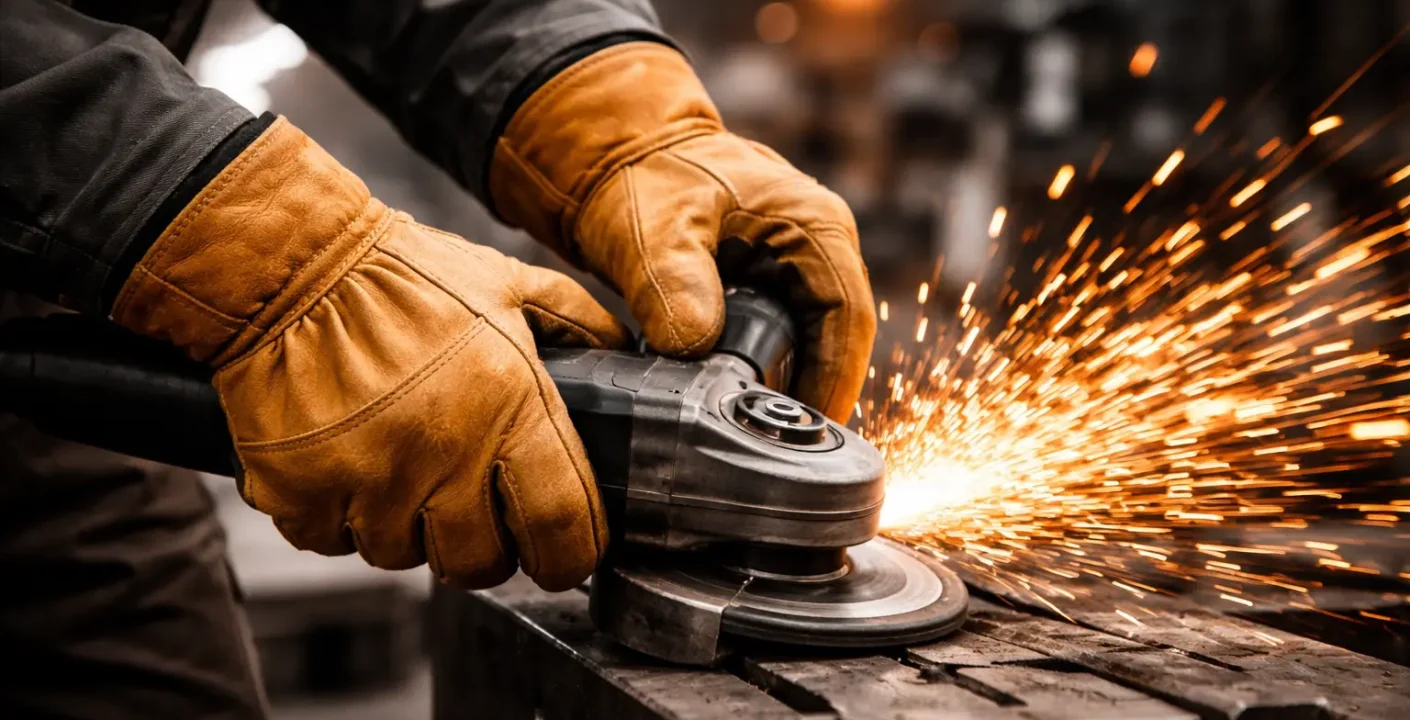
Hand injuries are among the most common and costly workplace incidents in industrial environments worldwide. Every shift, workers on fabrication floors, construction sites, automotive assembly lines, and warehouse operations expose their hands to sharp edges, abrasive surfaces, heat, and mechanical impact. For procurement managers and safety officers responsible for equipping entire workforces, choosing the right safety gloves is not a routine purchasing decision, it is a strategic investment that directly affects worker safety, regulatory compliance, and the total cost of your PPE program.Leather gloves remain the gold standard for industrial hand protection across the majority of demanding applications. The natural properties of leather. density, flexibility, breathability, and abrasion resistance, deliver a combination of protection and dexterity that synthetic materials consistently fail to replicate at equivalent thickness. This guide covers everything industrial buyers need to know to make informed, confident bulk procurement decisions for their workforce.
Why Safety Glove Quality Directly Affects Your Workforce and Your Costs
The purchase price of a glove is rarely the most significant number in a PPE program. The real cost calculation includes replacement frequency, injury claims, lost productivity, and the outcome of compliance audits, all factors that low-quality gloves consistently make worse.
When facilities source inferior safety gloves to reduce per-unit costs, the consequences appear quickly. Thin leather degrades under sustained friction. Weak stitching fails at stress points before the leather itself wears through. Workers compensate by doubling up gloves, wrapping worn pairs with tape, or removing gloves entirely to recover the dexterity that poor-fitting protection has taken away. Each of these outcomes carries a measurable cost that far exceeds the savings from cheaper procurement.
Premium safety gloves built from quality leather with reinforced stitching deliver a return procurement teams can quantify. They last significantly longer, maintain structural integrity across the full working shift, and keep workers protected without the fatigue and performance loss that inferior products introduce over time.
Understanding Leather Grades, Full Grain Leather vs Top Grain Leather
Leather grade is the single most important specification in any industrial glove procurement. Two grades dominate quality PPE manufacturing, and understanding the practical difference between them prevents costly misspecification.
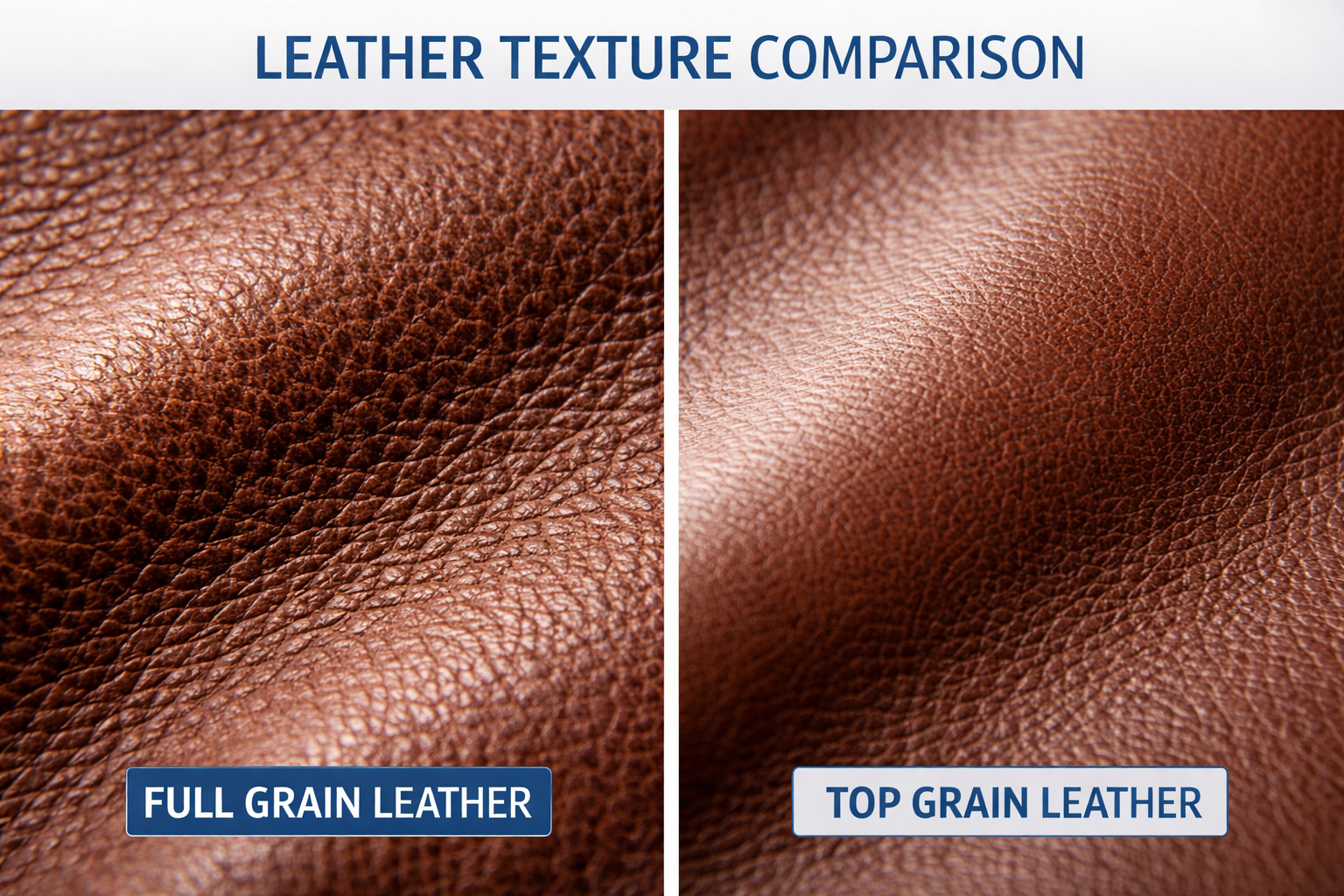
Full grain leather is produced from the outermost layer of the animal hide with the complete natural grain surface preserved. No sanding, buffing, or surface correction is applied. The entire original fiber structure remains intact, giving full grain leather gloves the maximum natural moisture resistance, abrasion resistance, and service life available in any leather grade. The tight fiber density of full grain leather means it resists penetration from oils, chemicals, and abrasive surfaces better than any processed alternative. For heavy fabrication, welding support tasks, and environments with chemical or oil exposure, full grain is the specification that delivers the longest total service life.
Top grain leather comes from the same upper hide layer but is lightly sanded and finished to remove natural surface imperfections. This produces a more visually consistent appearance across a bulk production run. Top grain leather retains strong abrasion resistance and excellent grip quality, the right specification for precision assembly, driver applications, and light fabrication where tactile sensitivity and surface consistency matter alongside mechanical protection. Both grades significantly outperform split leather for any application where glove quality directly affects safety outcomes and daily productivity.
Key Features to Look for When Sourcing Safety Gloves in Bulk
Beyond leather grade, several construction factors determine whether a glove performs consistently across an entire workforce over a full procurement cycle.
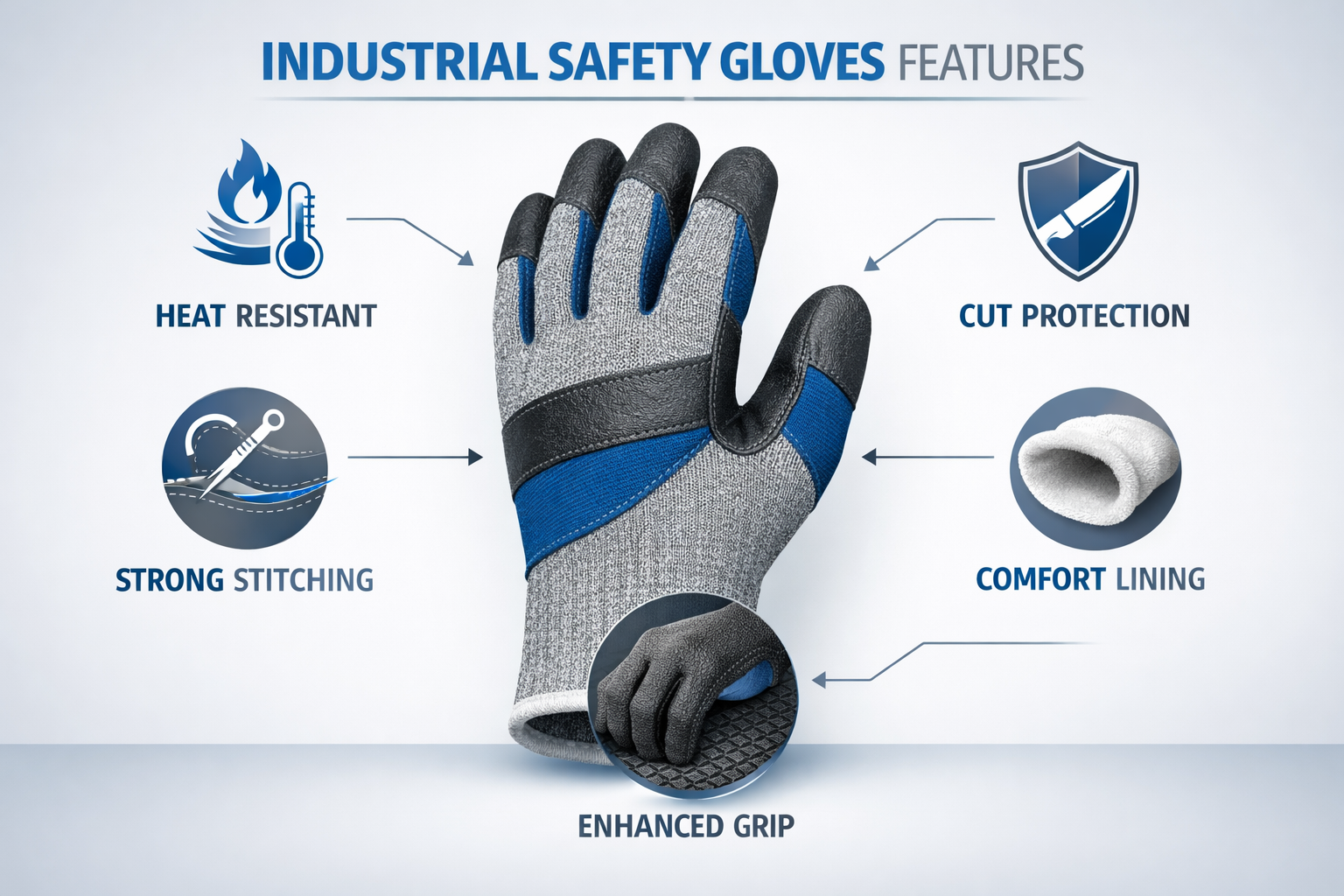
Stitching thread type is the most common failure point in industrial gloves under sustained use. Heat-resistant Kevlar stitching at high-stress seams, thumb crotch, finger bases, and palm patch joins, maintains tensile strength across the glove’s full working life. Standard cotton thread degrades under heat, friction, and repeated mechanical stress, causing seam failure while the leather outer shell remains serviceable.
Construction patterns affect both comfort and durability. A keystone thumb design positions the thumb at its natural resting angle, eliminating the stress concentration that causes early failure at the thumb crotch. A Gunn cut pattern reduces seams in the palm and high-contact zones, minimizing friction points that cause hand fatigue during sustained grip work.
Lining selection should reflect the thermal demands of the work environment. Unlined construction maximizes tactile sensitivity for precision tasks. Cotton lining adds breathability for general industrial use. Fleece lining provides moderate insulation for cold environments without the bulk that reduces hand function.
Size consistency across a bulk order is a procurement risk that experienced buyers prioritize. Confirm size tolerances with pre-shipment samples before committing to full order quantities. Customization capability, color coding, OEM packaging, logo embossing, private label options, should also be confirmed before establishing a supply relationship.
Matching Safety Gloves to Your Industry Application
Different industries place different demands on hand protection, and matching glove specification to application prevents both underprotection and unnecessary bulk.
Welding and fabrication operations require leather gloves with extended gauntlet cuffs, reinforced palm patches, and Kevlar stitching to handle sustained heat, spatter, and mechanical stress. MIG welding demands thicker split leather construction, while TIG welding benefits from thinner grain leather that maintains arc control and filler rod sensitivity.
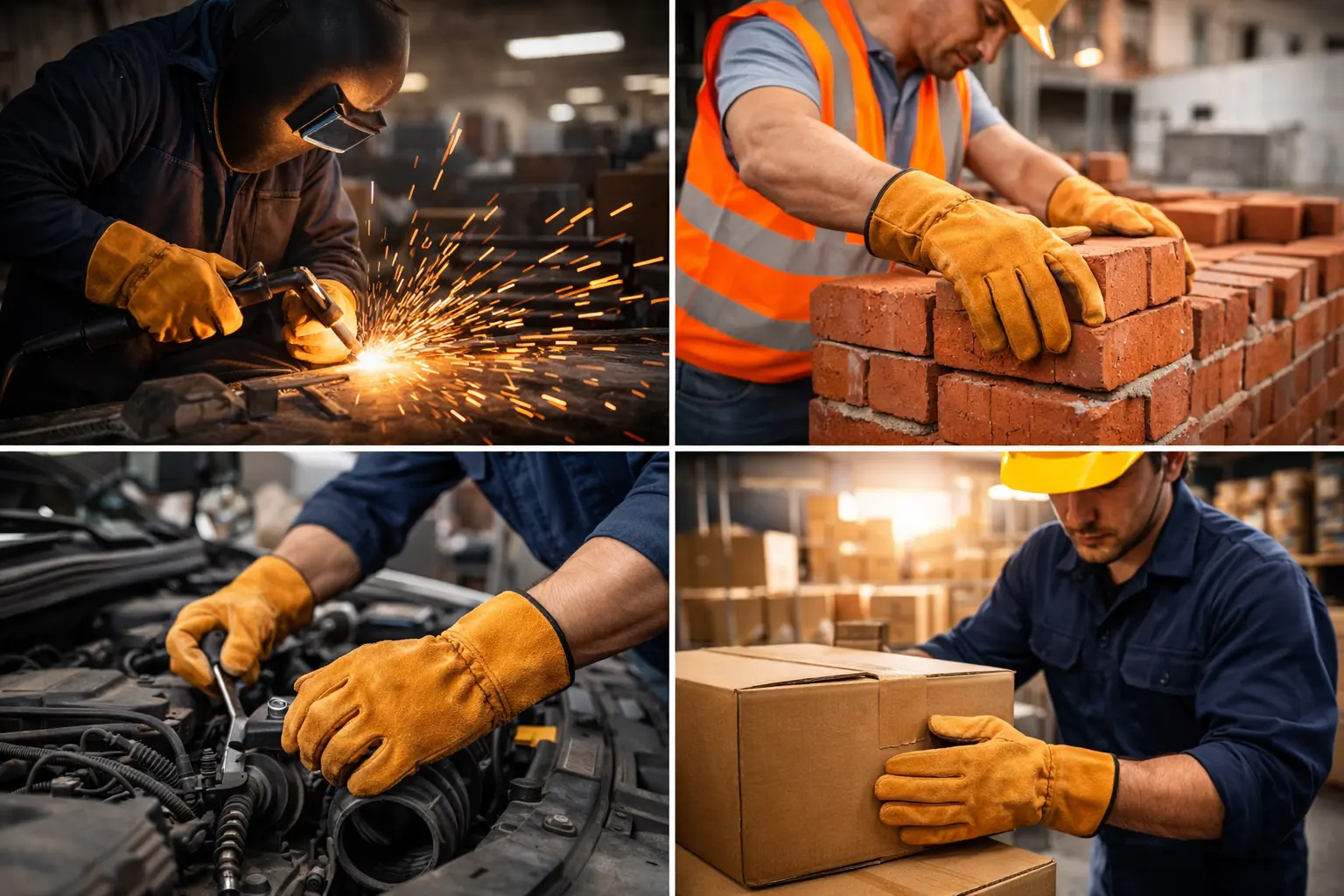
Automotive technicians need thin, flexible grain leather gloves that protect against cuts and abrasion without reducing the tactile feedback required for precision component assembly. Construction professionals need durable, breathable leather that handles daily mechanical demands across long outdoor shifts without restricting grip or hand movement. Warehouse and logistics operators require gloves that maintain grip quality on equipment and materials without the stiffness that leads workers to remove protection during detail tasks.
Why Global Buyers Source Safety Gloves from Pakistan
Pakistan’s position among the world’s largest leather producers gives domestic manufacturers a direct raw material advantage that import-dependent competitors cannot match. Faisalabad, Pakistan’s established industrial manufacturing hub, has developed specific expertise in safety glove production over decades of export-oriented manufacturing, combining skilled labor with vertically integrated leather supply chains that keep raw material costs competitive without sacrificing quality.
Safety gloves manufacturers in Pakistan serve buyers across North America, Europe, and the Middle East with consistent quality, reliable lead times, and full export compliance documentation. For procurement teams evaluating global sourcing options, safety gloves manufacturers in Pakistan offer the combination of leather craftsmanship, bulk production capacity, and competitive pricing that supports strong margins across international supply chains.
Why Hilton Glove Is the Right Manufacturing Partner
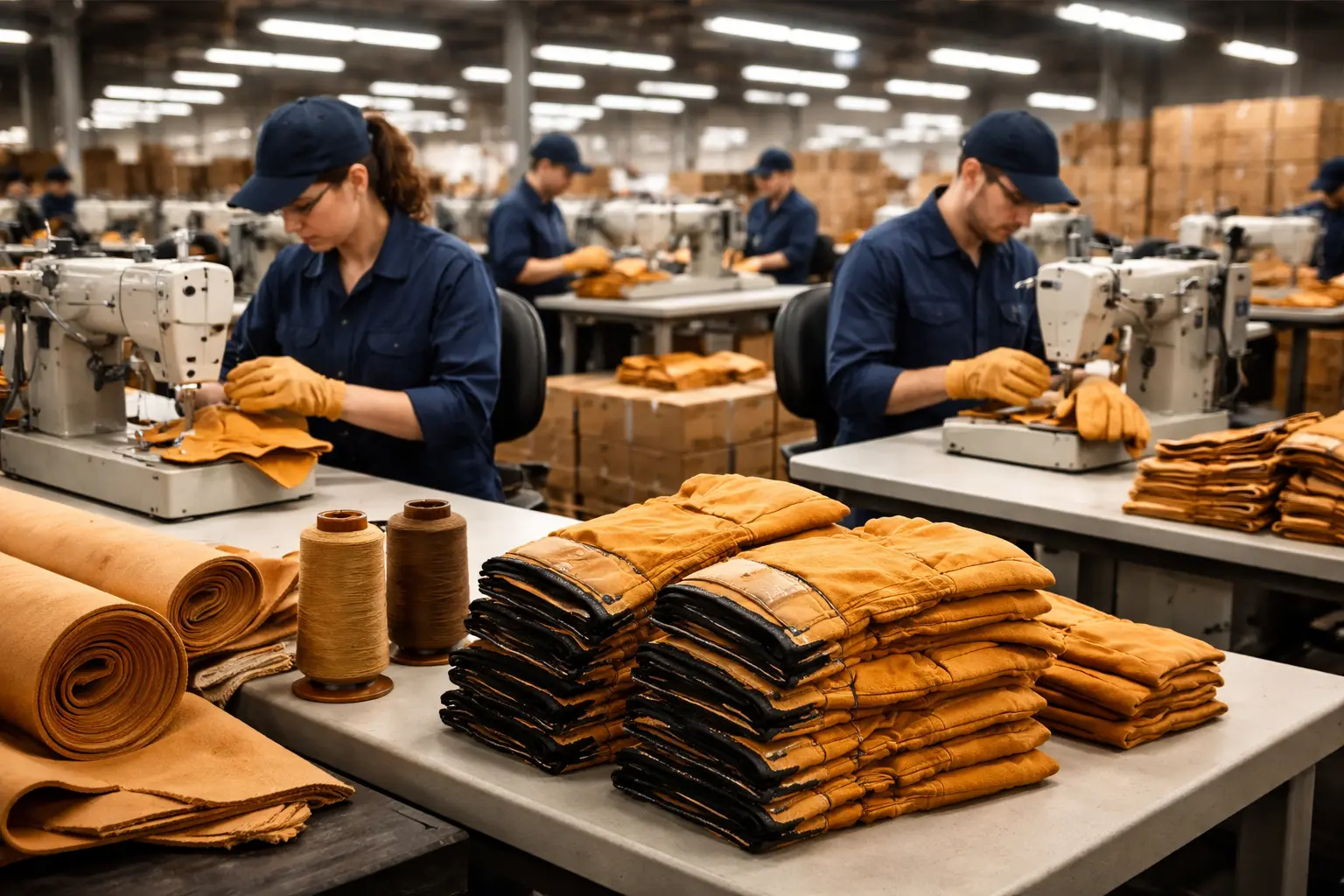
Hilton Glove manufactures a comprehensive range of grain leather work gloves, goatskin gloves, welding gloves, assembling gloves, and cut-resistant safety gloves from its facility in Faisalabad, Pakistan. With full OEM and private label manufacturing capability, pre-shipment quality inspection, and consistent bulk production across standard size ranges, Hilton Glove supports procurement teams that need reliable quality across every shipment.
Procurement teams sourcing premium leather gloves, goatskin gloves, welding gloves, and industrial safety gloves in bulk can explore Hilton Glove’s complete product range and request samples directly at hiltonglove.com
Making the Right Procurement Decision
Sourcing safety gloves for an industrial workforce requires more than comparing per-unit prices across supplier catalogues. Leather grade, stitching quality, construction pattern, size consistency, and supplier reliability all determine whether a glove protects workers effectively across its full working life, or generates hidden costs through early replacement, injury claims, and compliance failures.
Leather gloves built from quality grain leather with proper construction deliver the performance and longevity that serious industrial operations require. Evaluate supplier quality, request pre-shipment samples, and confirm customization capabilities before committing to bulk orders, because the right glove specification from the right manufacturing partner is the foundation of a PPE program that genuinely protects your workforce.