


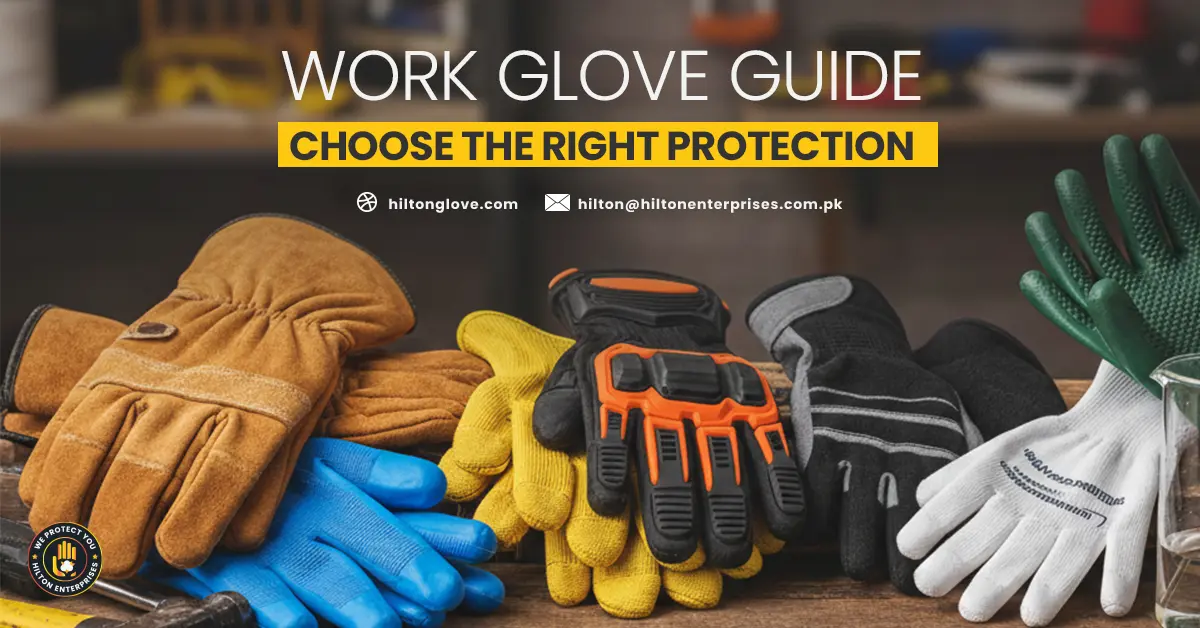
Understanding Work Glove Basics
Work gloves serve as the first line of defense against workplace hazards. Your hands are exposed to countless risks daily, from cuts and abrasions to chemical burns and extreme temperatures. The right gloves don’t just prevent injuries, they improve grip, enhance dexterity, and boost worker confidence.
Key Protection Categories
- Mechanical Protection: Guards against cuts, abrasions, punctures, and impact injuries from tools and materials.
- Chemical Protection: Shields skin from harmful substances, acids, solvents, and other corrosive materials.
- Thermal Protection: Protects against extreme heat, cold, sparks, and molten metal splatter.
- Electrical Protection: Insulates hands from electrical shock and arc flash hazards in live electrical work environments.
Types of Work Gloves: Materials and Applications
Leather Gloves
Leather work gloves remain the gold standard for heavy-duty applications. The material provides excellent durability, heat resistance, and abrasion protection. Discover our comprehensive collection of leather gloves for diverse applications.
- Split Leather: Thicker and more affordable, split leather offers robust protection for general construction and rough material handling. Our Single Palm Canvas Back and Double Palm Canvas Back gloves use split leather for demanding tasks.
- Grain Leather: Taken from the top layer of hide, grain leather delivers superior flexibility and comfort. Products like our Grain Leather Assembling Gloves and Furniture Hide Grain Leather gloves provide premium protection without sacrificing dexterity.
- Goat Skin: Exceptionally soft and pliable, goatskin leather molds to your hand for precision work. Our Goat Skin Gloves with keystone thumb design are perfect for tasks requiring fine motor control. Learn more about goatskin leather work gloves in our dedicated guide.
Knitted Gloves
Knitted and woven gloves offer versatility across multiple work environments. These lightweight options provide breathability while maintaining protection. Browse our knitted and woven glove collection.
- Cotton Knitted Gloves: Our Interlock Gloves and Jersey Fabric Gloves provide basic protection against dirt, minor abrasions, and surface damage. Ideal for light assembly and general warehouse work.
- Coated Gloves: Adding nitrile, PVC, or latex coatings to knitted gloves dramatically improves grip and chemical resistance. Our PVC Dotted Gloves and Criss Cross Knitted Gloves excel in oily or wet conditions.
- Cut-Resistant Options: Kevlar Gloves and Seamless Knitted Gloves with high-performance fibers protect against sharp edges while maintaining flexibility for detailed work. Check out our cut-resistant gloves guide for more information.
Choosing Work Gloves by Industry
Construction Work Gloves
Construction sites present multiple hazards: sharp materials, rough surfaces, heavy objects, and potential chemical exposure from wet cement. Nearly 18 percent of construction injuries in 2018 were hand injuries, making proper glove selection critical.
Construction workers need gloves that balance protection with dexterity for operating tools and equipment. Workers need well-fitting, comfortable gloves that are tight around the fingers to avoid extra glove material getting in the way, while maintaining a full range of motion for manual tasks.
Recommended Options:
- Hard Shell Knuckle Gloves for impact protection when handling heavy materials
- Grain Leather Assembling Gloves for general construction tasks
- Premium TPR Safety Gloves for enhanced grip and back-of-hand protection
- Double Palm Canvas Back for reinforced durability in high-wear areas
Explore our construction glove collection for industry-specific solutions.
Welding Applications
Welding demands specialized protection based on the specific welding process being used. Learn more in our best welding gloves guide.
TIG Welding: TIG welding requires excellent dexterity and sensitivity, with gloves typically thinner and more flexible than those used for other welding processes. Our TIG Welding Gloves use premium grain leather for precise torch control while protecting against moderate heat and light.
MIG Welding: MIG welding exposes workers to medium to high heat and a medium amount of sparks and molten splatter, requiring gloves with high levels of back-of-hand heat protection. Our Welding Gloves Reinforced Palm feature double-layer protection in critical areas.
Stick Welding: The most heat-intensive process requires maximum protection. Welding Gloves with Piping use thick split cowhide or buffalo leather with extended cuffs to shield against extreme heat and heavy splatter.
Browse all our welding gloves for professional-grade protection.
Warehouse and Material Handling
Warehouse workers face unique challenges: repetitive box handling, exposure to sharp edges on packaging, and the need for sustained grip throughout long shifts.
Cut-resistant gloves are best for workers handling boxes, pallets, and sharp edges, made with fibers like Kevlar or HPPE. Our Seamless Knitted Gloves provide the perfect balance of cut protection and flexibility.
Key Requirements:
- Enhanced grip for handling smooth cardboard surfaces
- Cut resistance from box edges and metal strapping
- Breathability for all-day comfort
- Durability to withstand high-volume handling
Recommended Options:
- PVC Dotted Gloves for superior grip in dry conditions
- Nylon Gloves for lightweight protection and excellent dexterity
- Criss Cross Knitted Gloves for enhanced palm protection
Check out our warehouse glove selection.
Manufacturing and Assembly
Manufacturing environments require gloves that won’t interfere with precision work while still protecting against mechanical hazards.
Our Grain Leather Assembling Gloves and Seamless Knitted Gloves allow workers to handle small parts, operate machinery, and perform detailed assembly tasks without compromising safety.
Explore manufacturing gloves designed for precision and protection.
Cold Weather and Winter Work
Working in freezing temperatures demands specialized insulation without sacrificing functionality.
Winter Solutions:
- Bio Liner Cold Resistance Gloves combine full-grain leather with specialized insulation
- Grain Leather Thinsulate Liner gloves maintain warmth down to extreme temperatures
- Winter Tactical Gloves offer weather protection for outdoor operations
Agriculture and Forestry
Agricultural work exposes hands to moisture, rough materials, and repetitive strain. Our Garden Gloves and heavy-duty cotton options protect while maintaining the tactile feel needed for planting and harvesting.
For forestry work requiring chainsaw operation and log handling, our reinforced leather options with Kevlar stitching deliver maximum cut and abrasion resistance.
Browse our agriculture gloves and forestry gloves collections.
Essential Selection Factors
Proper Fit and Sizing
Ill-fitting gloves reduce dexterity, cause fatigue, and may not provide adequate protection. Wearing gloves reduces the risk of hand injury by sixty percent, but workers will not wear gloves unless they fit well and allow for a full range of motion.
Measure hand circumference around the knuckles and refer to the manufacturer’s sizing charts for optimal fit.
Coating Materials for Enhanced Performance
- Nitrile Coating: Offers three times more tear and puncture resistance than natural rubber. Excellent for oily work environments and chemical exposure. Maintains flexibility in varying temperatures.
- PVC Coating: Provides superior abrasion resistance and grip. Ideal for general industrial applications and material handling.
- Latex Coating: Natural rubber elasticity delivers comfort and flexibility. Offers good chemical resistance and heat tolerance for diverse applications.
Durability vs Comfort
Heavy-duty gloves with reinforced palms and Kevlar stitching last longer but may reduce tactile sensitivity. Lightweight knitted gloves offer superior comfort and breathability but require more frequent replacement in demanding applications.
Consider your work environment and budget when balancing these factors. For high-volume operations, investing in premium materials often reduces long-term costs through extended glove life.
Safety Standards and Certifications
Understanding glove ratings helps ensure proper protection levels. Read our detailed certifications page for more information.
- ANSI/ISEA 105: North American standard measuring abrasion, cut, puncture, and impact resistance. Cut levels range from A1 (lowest) to A9 (highest).
- EN 388: European standard evaluating mechanical risks. Uses a four-digit code rating abrasion, cut, tear, and puncture resistance.
Hilton Glove is the best choice for gloves that are tested and certified to the relevant standards for your specific hazards.
Frequently Asked Questions
Q. What type of work gloves should I use for my job?
A. The right gloves depend on your specific hazards. Construction workers typically need leather gloves with impact protection, warehouse workers benefit from cut-resistant coated gloves, welders require heat-resistant leather based on their welding type (TIG, MIG, or stick), and manufacturing workers need precision gloves that maintain dexterity. Assess your workplace risks first, then match glove features to those hazards.
Q. What’s the difference between grain leather and split leather gloves?
A. Grain leather comes from the top layer of animal hide, offering superior flexibility, comfort, and a smoother finish, ideal for precision work and assembly tasks. Split leather comes from the inner layers, providing thicker, more affordable protection suitable for rough material handling and general construction. Grain leather is more expensive but offers better tactile sensitivity.
Q. How do I know what size work gloves to order?
A. Measure the circumference of your hand around the knuckles (excluding the thumb) using a flexible measuring tape. Compare this measurement to the manufacturer’s sizing chart. Gloves should fit snugly without restricting movement. Fingers should reach the glove fingertips without excess material, and you should be able to make a complete fist comfortably.
Q. Are cut-resistant gloves cut-proof?
A. No glove is completely cut-proof. Cut-resistant gloves are rated on a scale (ANSI A1-A9) based on how much force is required to cut through them. Higher ratings offer more protection but aren’t impenetrable. A9-rated gloves provide extreme cut resistance but can still be cut with enough force or sharp enough objects. Always use proper technique and tools alongside protective gloves.
Q. How often should work gloves be replaced?
A. Replace gloves when you notice visible damage (tears, holes, thinning), loss of grip, or reduced flexibility. Disposable gloves should be replaced after each use or when contaminated. Leather gloves in heavy-duty applications may last several months with proper care, while knitted gloves in high-wear environments might need weekly replacement. Inspect gloves before each use.